God’s Eyes Are Not Our Eyes
One heresy in the early church was called Donatism. The Donatists held that the sacraments were only efficacious if presided over by priests who were sinless. It didn’t take the church long to realize that if it held to this policy there would be no sacraments for anyone. So if the gospel can be proclaimed through the preaching of a sinner, then we must allow for the possibility that God’s healing may be accomplished through extraordinary means. God chooses a boy too young to be taken seriously to anoint as one chosen to lead Israel. When the prophet Samuel is sent by God to find the new king who will replace Saul, Samuel goes through a long line of all Jesse’s tall, strapping, competent-looking sons of appropriate age. When none of them are chosen, finally Jesse sends for young David. All of the obvious-to-us choices were declined in favor of a boy. What we may see as authoritative, respectable, and trustworthy may not always align with God. Today’s first reading reminds us that “the Lord does not see as mortals see” (1 Sam. 16:7).
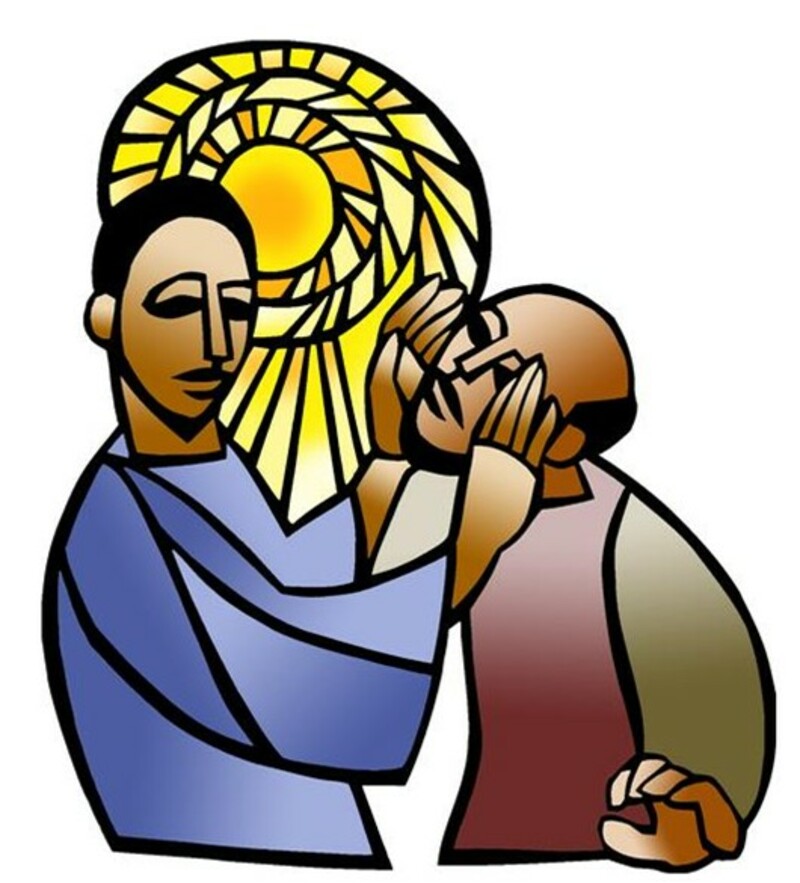
This theme of sight runs throughout today’s texts, both in terms of how God does not see as we see and also in Jesus’ healing of a man born blind. Jesus chooses to heal a blind man on the sabbath with dirt and saliva, much to the dismay of the good religious people who were certain they knew better than to display such questionable judgment and behavior. Lent is a time to reevaluate. Let it also be a time to examine the ways in which we do not see what God is doing around us because we too think we know better. Bottom line: God often uses the unexpected to accomplish redemption.
Gospel: John 9:1-41
13 They brought to the Pharisees the man who had formerly been blind. 14 Now it was a Sabbath day when Jesus made the mud and opened his eyes. 15 Then the Pharisees also began to ask him how he had received his sight. He said to them, “He put mud on my eyes. Then I washed, and now I see.” 16 Some of the Pharisees said, “This man is not from God, for he does not observe the Sabbath.” Others said, “How can a man who is a sinner perform such signs?” And they were divided. 17 So they said again to the blind man, “What do you say about him? It was your eyes he opened.” He said, “He is a prophet.”
18 The Jews did not believe that he had been blind and had received his sight until they called the parents of the man who had received his sight 19 and asked them, “Is this your son, who you say was born blind? How then does he now see?” 20 His parents answered, “We know that this is our son and that he was born blind, 21 but we do not know how it is that now he sees, nor do we know who opened his eyes. Ask him; he is of age. He will speak for himself.” 22 His parents said this because they were afraid of the Jews, for the Jews had already agreed that anyone who confessed Jesus to be the Messiah would be put out of the synagogue. 23 Therefore his parents said, “He is of age; ask him.”
24 So for the second time they called the man who had been blind, and they said to him, “Give glory to God! We know that this man is a sinner.” 25 He answered, “I do not know whether he is a sinner. One thing I do know, that though I was blind, now I see.” 26 They said to him, “What did he do to you? How did he open your eyes?” 27 He answered them, “I have told you already, and you would not listen. Why do you want to hear it again? Do you also want to become his disciples?” 28 Then they reviled him, saying, “You are his disciple, but we are disciples of Moses. 29 We know that God has spoken to Moses, but as for this man, we do not know where he comes from.” 30 The man answered, “Here is an astonishing thing! You do not know where he comes from, yet he opened my eyes. 31 We know that God does not listen to sinners, but he does listen to one who worships him and obeys his will. 32 Never since the world began has it been heard that anyone opened the eyes of a person born blind. 33 If this man were not from God, he could do nothing.” 34 They answered him, “You were born entirely in sins, and are you trying to teach us?” And they drove him out.
35 Jesus heard that they had driven him out, and when he found him he said, “Do you believe in the Son of Man?” 36 He answered, “And who is he, sir? Tell me, so that I may believe in him.” 37 Jesus said to him, “You have seen him, and the one speaking with you is he.” 38 He said, “Lord, I believe.” And he worshiped him. 39 Jesus said, “I came into this world for judgment, so that those who do not see may see and those who do see may become blind.” 40 Some of the Pharisees who were with him heard this and said to him, “Surely we are not blind, are we?” 41 Jesus said to them, “If you were blind, you would not have sin. But now that you say, ‘We see,’ your sin remains.”